
Liver-Related Single-Cell and Spatial Transcriptomics
In the Wanlu Liu Lab research training program, I built a computational foundation for liver-related single-cell and spatial transcriptomics, with a focus on PSC liver data integration, cell type annotation, and Visium HD spatial analysis. I also serve as the project leader of a university-level SRTP project on liver fibrosis spatial remodeling.
Training Path
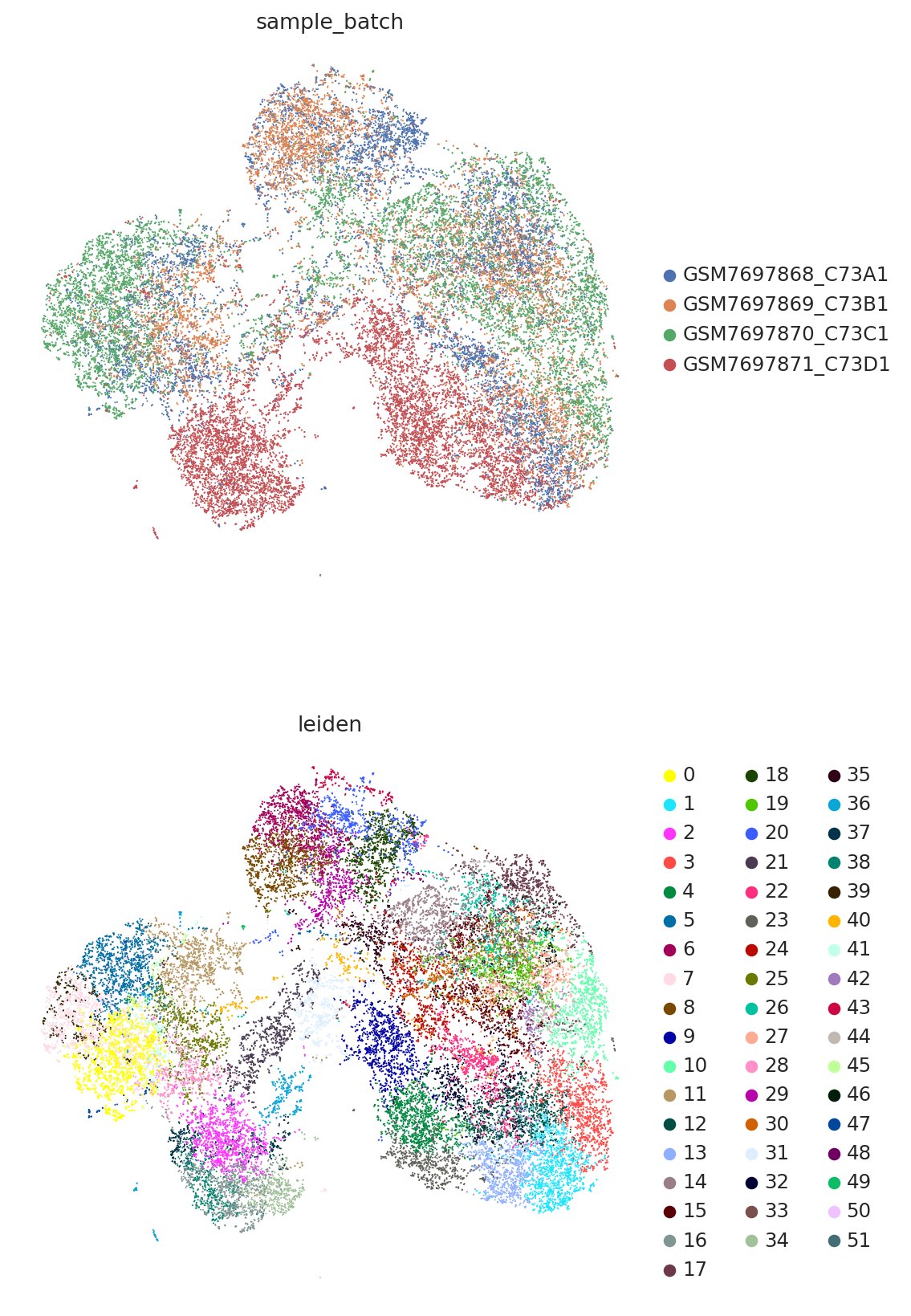
UMAP views used to inspect sample batch structure and Leiden clustering after integration.
Liver Single-Cell Dataset Integration
I worked on liver transcriptomic dataset integration as part of the lab training, practicing how to organize single-cell and single-nucleus data for downstream comparison and annotation.
Using Scanpy and scvi-tools, I ran a compact workflow covering AnnData processing, highly variable gene selection, scVI/scANVI modeling, UMAP visualization, clustering, and batch-effect inspection.
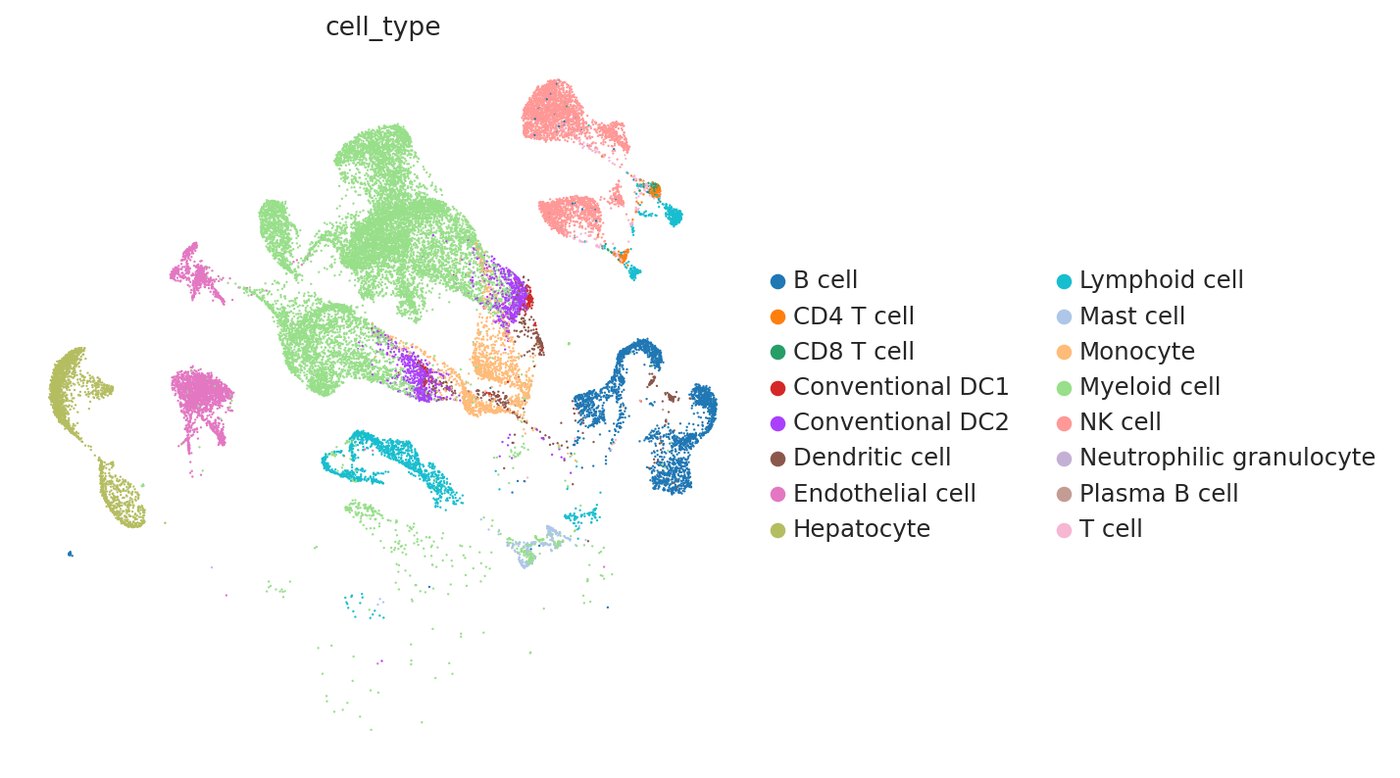
Automatic annotation with scMulan provided an initial cell type map for downstream checking.
Cell Type Annotation
After integration, I explored cell type annotation using scMulan and marker-based checking. The workflow covered major liver and immune populations, including hepatocytes, cholangiocytes, endothelial cells, stellate cells, T cells, B cells, NK cells, and myeloid cells.
This step helped me learn how to compare predicted labels with cluster structure and biological marker evidence, rather than treating annotation as an automatic black-box output.
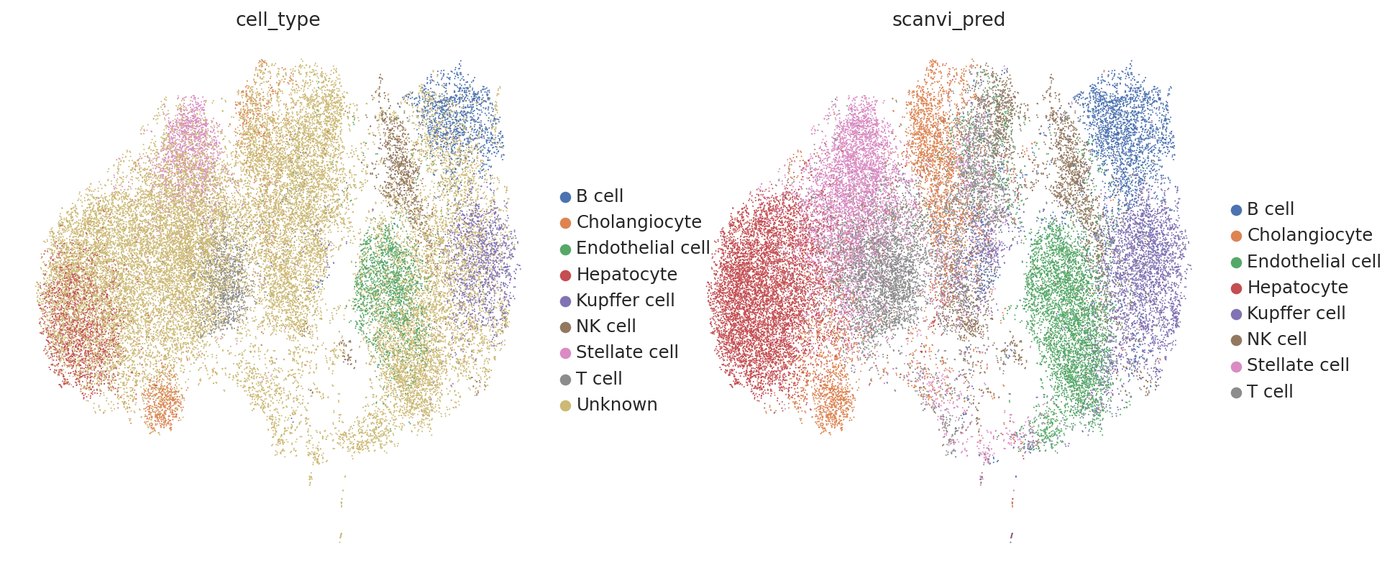
scANVI Annotation Comparison
Comparison between existing cell type labels and scANVI-assisted predicted labels.
I used this comparison to check how predicted labels mapped onto the integrated latent space and whether major liver cell populations separated in a biologically interpretable way.
Approved University-Level SRTP Project
I am the project leader of an approved university-level SRTP project on high-resolution spatial transcriptomic analysis of liver fibrosis.
The project focuses on spatial remodeling, hepatocyte zonation, and local microenvironmental patterns in liver fibrosis.
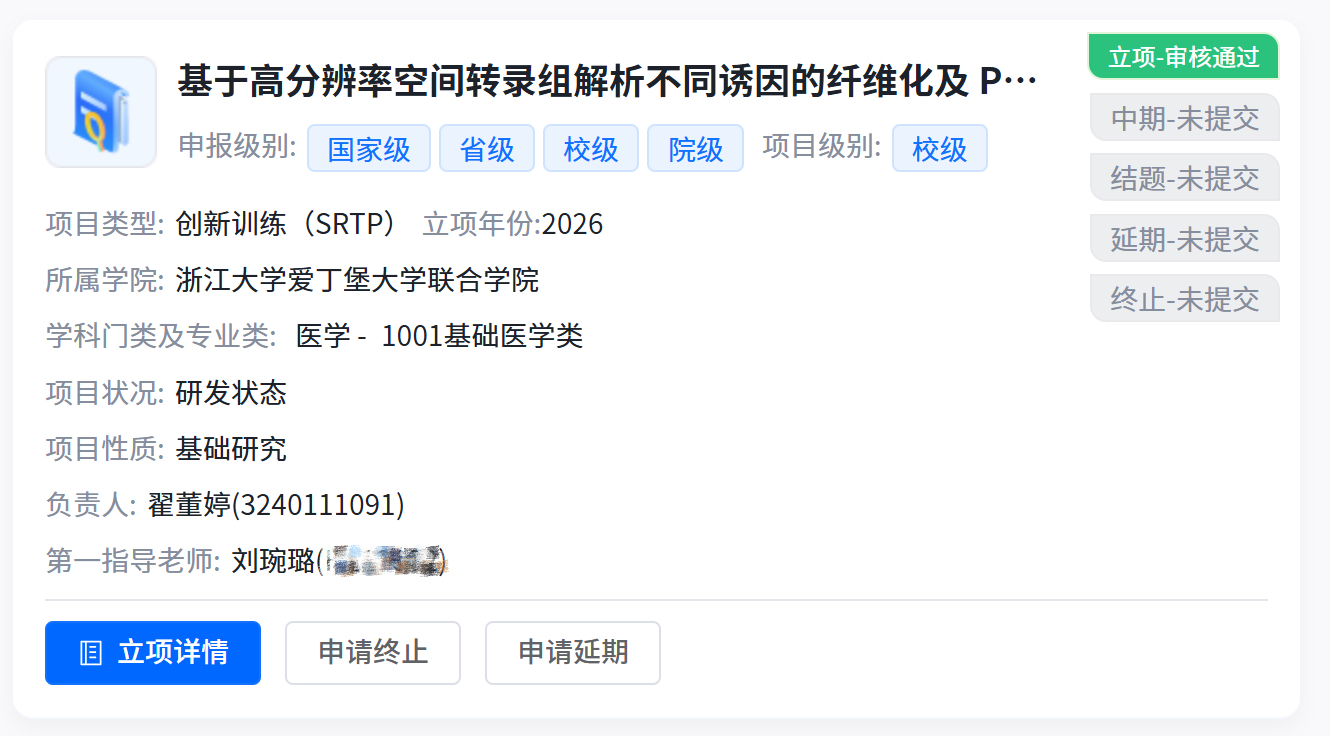
University-level SRTP project approval record.
Spatial Transcriptomics Project
The project centers on how liver tissue organization changes during fibrosis, especially how hepatocyte spatial gradients and surrounding cell populations may be remodeled in disease contexts.
The planned analysis combines spatial expression mapping, cell type annotation, gradient-oriented interpretation, and microenvironment-level comparison.
My Contributions
- Presented matplotlib and basic visualization concepts during the single-cell training meeting.
- Practiced AnnData and Scanpy workflows for preprocessing, dimensionality reduction, clustering, and marker gene analysis.
- Practiced liver single-cell/single-nucleus dataset integration using scVI and scANVI.
- Explored automatic and manual cell type annotation with scMulan, predicted labels, cluster structure, and liver cell markers.
- Led a university-level SRTP project on Visium HD spatial transcriptomics, liver fibrosis, and PV-CV axis remodeling.
Methods and skills: Scanpy, AnnData, scVI, scANVI, scMulan, UMAP, Leiden clustering, marker gene analysis, batch correction, scRNA-seq, snRNA-seq, spatial transcriptomics, Visium HD, PV-CV zonation, PSC liver, fibrosis microenvironment, Python data visualization.